Head’s-up surgery with 3D glasses
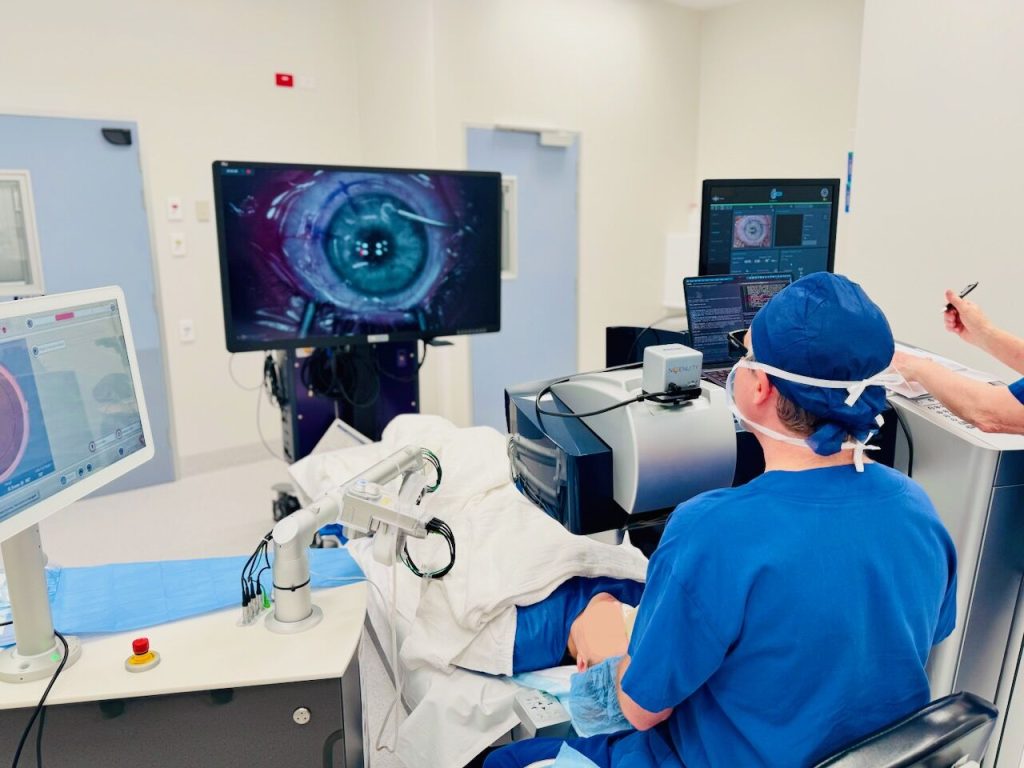
In a first for the Australia-Pacific region, Dr Gunn performed LASIK surgery in July while looking at a high-definition 3D display, wearing polarized 3D glasses to perceive depth. While the system allowed for a more comfortable operating position for the doctor, it also minimised light exposure to the patient’s eye.
A bonus is the extra scope the technology gives for teaching. Because everyone in the operating theatre sees the same large 3D image on screen, not just the surgeon who looks through a traditional eyepiece, everyone in the room can follow the procedure in real time.
“The stereoscopic detail is remarkable, the ergonomics are far better, and everyone in theatre sees exactly what the surgeon sees,” Dr Gunn said. “It was the first time our theatre staff had watched LASIK in stereoscopic 3D.”
Augmented reality for CAIRS surgery
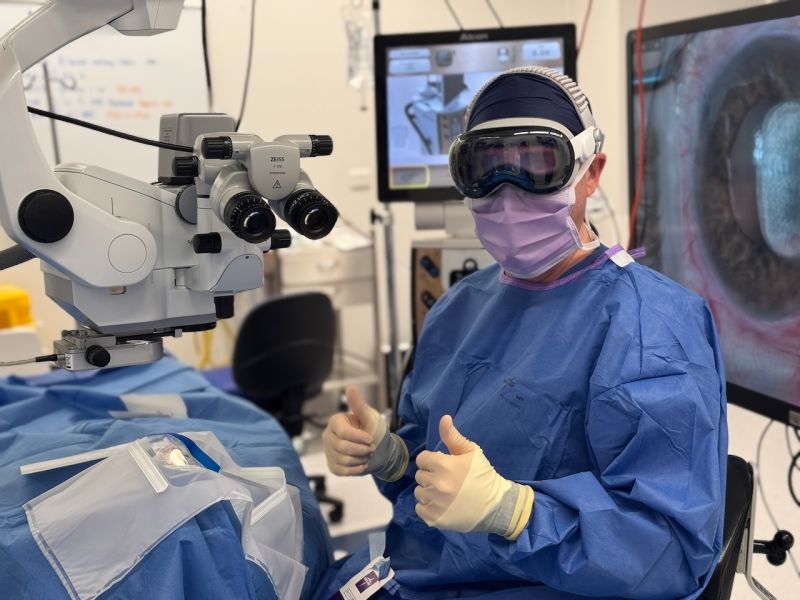
A month later Dr Gunn broke more barriers, performing what is believed to be the world’s first CAIRS procedures using Apple Vision Pro at South Brisbane Day Hospital. The Apple Vision Pro is a wireless, head mounted display which replaces the external monitor. It gives the wearer access to digital files and programs with simple hand gestures in the air, without needing to touch a computer keyboard or mouse.
While wearing the Apple Vision Pro headset, Dr Gunn could see both a live, 3D display of the patient’s eye and the customised map he’d designed using CAIRS Plan for inserting segments into the eye to treat keratoconus.
“The headset let me position and resize the operative view while keeping my surgical plan beside it. It kept the patient’s unique topography, segment plan and surgical history all visible during surgery,” Dr Gunn says.
The headset’s high‑resolution external cameras also captured the theatre surroundings, keeping the instruments, theatre team and surrounding environment clearly in view. It displayed the live video feed inside the headset, so the real world was also visible while wearing the fully enclosed device.
“Mid-surgery, while still scrubbed, I was able to review the outcome for the first eye, then update the surgical plan immediately. Previously, that would have meant un-scrubbing and engaging with a laptop computer to review the patient’s notes,” Dr Gunn says.
“This was the first use of Apple Vision Pro for surgery of any type in Australia,” Dr Gunn says.
“We’re excited to be part of this technological progress at South Brisbane Day Hospital.”